Home Blog Page 2

From Poland to Prague as planned by AI

We are planning a trip through Poland and the Czech Republic later this year. Why Poland?  Well, it’s one of the few countries that neither of us been to – Sue has visited more than 90 over the years – and it comes highly recommended.

Also, we will be in Europe anyway, for work, so we were already more than halfway there. We had a chat with people who have lived there and checked out a couple of websites and came up with a plan to fly into Warsaw, then go to Krakow and Wroclaw, all by train before crossing the border to Prague in Czechia and then flying out.

I factored in four days in Warsaw, then three each in Krakow and Wroclaw before taking the Baltic Express train to Prague in the Czech Republic.

Now, I’ve been experimenting with Artificial Intelligence recently and it occurred to me to test it against my spreadsheets and itineraries, perhaps to see if Claude.ai, our robot of choice, would have any better ideas.

Detailed Itinerary

“I am interested in modern political history (20th Century), the Cold War and art,” I told him (it?), adding my arrival and departure dates. “Where should I go and what should I see to make the most of my time?”

I am both gratified and slightly disappointed to say that Claude came up with an almost identical itinerary to my own, except he suggested a day-trip to Danzig, which I hadn’t considered.

Hmmm.  Maybe he has been secretly reading my files.  But then he offered to put together a more detailed list of places to see and go

Why not? I thought.  ‘Yes, please,’ I replied, despite knowing that politeness is not required when dealing with Artificial Intelligenge.

So then he came back with a list of to-dos that were sensibly spaced out, basically one each in the morning, afternoon and evening. Allowing for diversions as and when the opportunities arose: that is my style of laid-back travel.

The final AI itinerary is reproduced below. Now, I am aware that AI is far from 100 per cent reliable.  I recently had to correct a post on our other website (flatchat.com.au) which has AI generated information that was plainly false.

I also know that AI is plundering copyrighted material, like at least three of my books and many of my newspaper articles, for its own uncredited and unpaid purposes.

I’m also aware that AI probably won’t be much help when you’ve lost your passport and tickets, or had your phone and credit cards nicked, or been refused entry at an American airport for posting something nasty about President Trump on Instagram.

But I love the fact that I can plan to go into a country I don’t know and within seconds have a basic guide to get me started and not have to be chained to a bunch of fellow travellers, being rushed in buses from one must-see venue to the next.

By the way, when we get to Krakow, we will be checking in with Tour Tailor Krakow and Zuzanna (who is featured in the video above).

Will AI replace travel agents?  I don’t think so. They are more likely to use it as a starting point before curating your trip, only with the addition of reliable suggestions and actual plane, train and hotel bookings that AI can’t provide.

By the way, I asked Claude to suggest some “trendy boutique hotels” in a certain price range and gave me a list of a dozen but said he didn’t have time to check the prices – honest! – and recommended I try Tripadvisor.

Sometimes Artificial Intelligence can sound way too much like a human for comfort. 

We won’t be following this slavishly – we have a couple of walking tours of Prague lined up already – but this would have been a great start to my planning… had I done this before I hit the spreadsheet.

Here’s the final itinerary from Claude, but with dates removed for obvious reasons.

Poland & Czech Republic Itinerary

Old Town Square, Warsaw

Modern Political History, Cold War, and Art Focus

POLAND

Warsaw

Day 1

Morning: Orientation walk through Warsaw’s reconstructed Old Town (UNESCO site) to appreciate the context of the city’s destruction and rebuilding

  • Afternoon: Warsaw Rising Museum – comprehensive exhibition on the 1944 Warsaw Uprising against Nazi occupation
  • Evening: Stroll along the Royal Route to see key historical buildings

Day 2

  • Morning: Palace of Culture and Science – iconic Communist-era skyscraper, Stalin’s “gift” to Warsaw
  • Afternoon: POLIN Museum of the History of Polish Jews – award-winning museum covering 1000 years of history including significant 20th century events
  • Evening: Dinner in Praga district – formerly working-class area with interesting Cold War remnants

Day 3

  • Morning: Museum of Life Under Communism – small but fascinating collection offering insight into everyday life during the Communist period
  • Afternoon: Zachęta National Gallery of Art – major collection of modern Polish art
  • Evening: Visit the former Communist Party Headquarters building (now hosting financial institutions)

Day 4

  • Morning: Day trip to Gdańsk (3 hr train ride) – birthplace of Solidarity movement
  • Afternoon: European Solidarity Centre – documenting the anti-communist opposition
  • Evening: Return to Warsaw

Kraków

Krakow Town Square – jumping off point for visits to Auschwitz

Day 5

  • Morning: Train from Warsaw to Kraków (2.5 hours)
  • Afternoon: Schindler’s Factory Museum – excellent exhibition on Kraków under Nazi occupation
  • Evening: Explore Kazimierz (historic Jewish quarter)

Day 6

  • Morning: Day trip to Auschwitz-Birkenau Memorial and Museum (1.5 hr from Kraków)
  • Afternoon: Continue Auschwitz visit
  • Evening: Return to Kraków

Day 7

  • Morning: MOCAK Museum of Contemporary Art
  • Afternoon: Nowa Huta district tour – planned Socialist Realist suburb with excellent Cold War history
  • Evening: Transfer to Wrocław (3.5 hr train ride)

Wrocław

Wroclaw – the Venice of Poland

Day 8

  • Morning: Orientation walk around Market Square and University Quarter
  • Afternoon: Centennial Hall – UNESCO World Heritage site and masterpiece of early 20th century architecture
  • Evening: Stroll along the Oder River to see the illuminated city

Day 9

  • Morning: Panorama of the Battle of Racławice – unique 360° painting
  • Afternoon: National Museum in Wrocław – for art collections with significant 20th century works
  • Evening: Search for politically significant dwarf statues throughout the city (Wrocław’s unique public art installation)

Day 10

  • Morning: Visit to Solidarity Square – memorial to anti-communist resistance
  • Midday: Direct train from Wrocław to Prague (4h 45m)
  • Evening: Arrival in Prague, orientation walk around Old Town Square

CZECH REPUBLIC

Prague Castle – steeped in European history

Prague

Day 11

  • Morning: Museum of Communism – overview of life during the Communist era
  • Afternoon: Prague Castle complex and St. Vitus Cathedral (for historical context)
  • Evening: Stroll across Charles Bridge at sunset

Day 12

  • Morning: National Memorial to the Heroes of the Heydrich Terror (Church of St. Cyril and Methodius) – moving site related to the assassination of Nazi leader Reinhard Heydrich
  • Afternoon: Museum of 20th Century Czech History at the Vítkov National Monument
  • Evening: Visit to Lucerna Passage (owned by Václav Havel’s family)

Day 13

  • Morning: Nuclear Bunker Museum – Cold War relic
  • Afternoon: DOX Centre for Contemporary Art
  • Evening: Lennon Wall – symbol of resistance during Communist era

Day 14

  • Morning: Wenceslas Square – site of 1968 Prague Spring demonstrations and 1989 Velvet Revolution
  • Afternoon: Final explorations based on personal interests or return to favorite sites
  • Evening: Departure

Would you ever think of using AI to plan your own overseas trip. Or would you rather go with a package tour or trust a travel agent?

Write to us at mail@mildrover.com and we’ll publish your thoughts (and maybe some experimental itineraries).

Italy’s hidden secrets served on a plate

0

There’s something counter-intuitive about suggesting alternative destinations so that travellers can avoid “over-touristed” destinations.  We suppose it’s a question of getting in first and moving on before the hordes arrive.

Italy-bound travellers looking to beat the crowds this northern summer can turn to The Genuine Experience, a leader in sustainable travel that crafts immersive journeys focused on Italian culinary traditions, wellness and adventure. The culinary tour provider has released its list of underrated Italian destinations for 2025. Here are four destinations to explore before the secret is out:

Grad a glass of vino in Canavese
  • Valchiusella and Canavese (Piedmont) – Just 1.5–2 hours from Milan but feels like a different planet. This alpine corner is all rolling vineyards, fresh cheese, crisp mountain air and total tranquility. If you like your wine with a view (and zero tour buses) this one’s for you.
  • Filicudi (Sicily) – One of the Aeolian Islands and basically the definition of laid-back. Think: fishing trips with locals, grilling your catch right on the boat and long, quiet hikes with nothing but sea breezes and birdsong. No beach clubs, no stress, just magic.
  • Amatrice and L’Aquila (Lazio and Abruzzo) – A couple of hours from Rome and full of hearty food and fresh-air adventures. This is the land of Amatriciana sauce, Norcia’s legendary salumi and wild parks where you can hike, canoe and breathe deep. Rustic and real.
  • Carloforte and Cagliari (Sardinia) – San Pietro Island’s Carloforte is big on tuna traditions and dramatic seaside cliffs. Meanwhile, Cagliari blends ancient history with good vibes – museums, markets, beaches and aperitivo spots you’ll never want to leave.

“More and more of our travellers are skipping the usual postcard towns and heading off-script,” says Livio Colapinto, co-founder of The Genuine Experience. “They want to meet real people, eat real food and slow things down a bit.

“These aren’t just pretty places — they’re places that make you feel human again. Less noise, more connection. That’s the real luxury these days.”

About The Genuine Experience

The Genuine Experience curates custom sustainable trips across Italy for travellers seeking something deeper than the standard tourist trail. With exclusive access to Slow Food artisans, local winemakers and regional chefs, TGE was recently shortlisted for PURE 2025 and continues to be a trusted travel partner for chefs, creatives and explorers looking to “experience Italy in a more intimate regenerative way.”

Lux it up in this romantic glamping retreat

Want to get close to nature without roughing it? Like a little luxury with your escape from the city hustle and bustle?

There’s a new gem in the Blue Mountains for couples looking for an intimate and peaceful getaway, launched just in time for the Easter and Anzac Day weekends.

Set within a sprawling 28-acre heritage estate in Blackheath, Parklands Blue Mountain’s new premium Lakeside Canopy tents offer a secluded hideaway nestled in the lush gardens of the estate, right beside the property’s private lake.

This is luxurious glamping with the trimmings of a hotel stay, including Parkland’s luxury day spa.

Every Lakeside Canopy has indoor/outdoor floorplans across a spacious 53 sqm.  Chandeliered ceilings, sleek ensuite bathrooms, plush beds, reverse-cycle air-conditioning and built-in kitchenettes complete the indoor facilities.

Guests can enjoy slow afternoons outdoors on the Canopy’s sun deck, soak up the tranquility in the free-standing outdoor bathtub and enjoy evenings beneath the stars by the Canopy’s outdoor firepit.  

An overnight stay in Parklands’ new Lakeside Canopies includes either breakfast in-room or in the main homestead. Guests also have full use of the property’s facilities including Parklands Day Spa and guest lounge located in the main lodge surrounded by the estate’s extensive manicured gardens.

Parklands is beautifully positioned in the natural beauty of the Grose Valley enjoying breathtaking vistas and nearby bushwalking trails in the World Heritage Listed Blue Mountains National Park.

 For bookings please visit: https://www.parklands.com.au/rooms

*Lakeside Canopy Bed and Breakfast from $569 (1 x night, 2 guests)

*Lakeside Canopy Gourmet Getaway from $779 (1 x night, 2 guests including 3-course dinner at Wintergarden, The Hydro Majestic) 

Parklands Blue Mountains

132 Govetts Leap Road

Blackheath, NSW Blue Mountains

P: 612 4787 7211

Website: https://www.parklands.com.au/

Instagram: @parklandslodges

Facebook: https://www.facebook.com/countrygardensandlodges

More than sushi: Japan’s fantastic food, region by region

0

The food scene in Japan is a wild ride of flavors, traditions and local gems. From slurping ramen in Tokyo to munching on takoyaki in Osaka, every region has its own delicious story to tell. Whether it’s fresh sashimi, crispy tempura or a steaming bowl of udon, Japanese cuisine is packed with history, culture and seriously good eats. So, grab your chopsticks – we’re diving into the tasty world of Japan’s regional dishes

Hokkaido: Dishes from the sea

Hokkaido, the northernmost island of the Japanese archipelago, is known for its snow-covered landscapes, harsh winters and comfort food. While seafood and fish are national specialties in Japan, it is in Hokkaido that they are among the most renowned. Local cuisine is marked by this abundance of marine ingredients, but also by a rare diversity of soups and broths. The island is also famous for its wines and spirits.

Kaisen-don, Japan
Kaisen-don

Hokkaido’s signature dishes:

  • Kaisen-don – A local variation on donburi with a showcase of Hokkaido seafood: thinly sliced salmon, tuna and yellowtail, garnished with sea urchin, scallops and shrimp
  • Genghis Khan (Jingisukan) – A dish based on grilled lamb and mutton, atypical as this meat is rarely used in Japanese cuisine
  • Sapporo Ramen – One of Japan’s most popular ramen variations, with a rich miso broth, often topped with Hokkaido butter
  • Soup Curry – Japanese curry enjoyed in Hokkaido as a soup, with chicken, potatoes, mushrooms, and other ingredients

Some of Hokkaido’s ingredients and specialties:

  • Seafood – especially sea urchins (uni) from Rausu
  • Dairy products – Hokkaido is renowned for its butter, cream and milk
  • Wines and spirits – including Nikka and Akkeshi whisky, both born and produced in Hokkaido

Tohoku: Traditional cuisine

Tohoku is one of Japan’s most unique regions. Characterized by untamed nature and preserved traditions, it also boasts its very own culinary identity. Tohoku cuisine is marked by the richness of its soil, where many of Japan’s main ingredients are grown.

Yunezawa beef, Japan
Yunezawa beef

Tohoku’s signature dishes:

  • Hittsumi – A soup typical of the Tohoku countryside, made with hand-stretched dumplings, cooked in a soy sauce-based broth, accompanied by chicken and vegetables
  • The 3 noodles of Morioka:
    • Reimen – eaten cold
    • Jajamen – eaten with a miso and meat paste
    • Wanko soba – served in individual bowls that can be seasoned separately (with contests for the number of bowls eaten)
  • Sendai Gyutan – A dish based on beef tongue, finely trimmed and charcoal-grilled for tender meat
  • Kiritanpo – Rice dumplings, grilled on a Japanese cedar stick or eaten as nabe (a stew)
  • Local variations on national dishes, such as Utsonomiya gyozas and Zunda mochi

Some of Tohoku’s ingredients and specialties:

  • Seafood – especially Murakami salmon, air-dried in front of restaurants
  • Fruits – apples from Aomori, peaches from Fukushima, grapes and pears from Yamagata
  • Yunezawa beef
  • Uonuma rice from Niigata, recognized as one of the best in the world

For more on Tohoku’s amazing food, click here!

Tokyo and Chubu: Surf and turf on the menu

The Kanto region of Tokyo is one of the richest in terms of cuisine. With the capital at the crossroads of both domestic and international trade, the region’s gastronomy has evolved with the influences that have marked it through the ages. Nearby, the Chubu region (Japanese Alps) is also characteristic, easily identifiable thanks to its dishes born of rich local agriculture at the foot of Japan’s emblematic mountain peaks.

Shoyu Ramen, Japan
Shoyu ramen

Kanto and Chubu’s signature dishes:

  • Chankonabe – A hearty stew from Tokyo eaten by sumo wrestlers to build strength, made with meat, vegetables and tofu in a savory broth
  • Shoyu Ramen – The Tokyo version is the most popular Japanese ramen, with a rich broth flavored with soy sauce and thin, wavy noodles
  • Miso-katsu – A variant of tonkatsu from Nagoya, where breaded pork chop is topped with a rich, sweet miso sauce
  • Chirasu-don – A bowl of rice topped with small white fish called chirasu, often accompanied by shiso and seaweed
  • Monjayaki – A Tokyo specialty similar to okonomiyaki, with a more liquid batter cooked directly on a hot plate
  • Dorayaki – A dessert from Tokyo made from two sponge cake pancakes with red azuki bean paste in the middle

Some of Kanto and Chubu’s ingredients and specialties:

  • Seafood – especially in Kanazawa, a popular destination for seafood dishes
  • Yuba – dried tofu skin, often added to soups
  • Hida beef
  • Boshu Biwa – a fruit from Chiba prefecture, known as Japanese loquat
  • Yamanashi wine – wines grown at the foot of Mount Fuji, with famous vineyards such as Marufuji, Sadoya or Tominohoka
  • Schichimi spices from Nagano – blends of 7 spices, most famously from Yawataya Isogoro

Kansai: Japan’s kitchen

The Kansai region is at the heart of Japanese gastronomy. As the country’s first capital, its ports have been hubs for trade with the rest of the world, fueling the local cuisine. Osaka, long dubbed “Japan’s kitchen,” is the figurehead of this region.

Okonomiyaki (Osaka) , Japan
Okonomiyaki (Osaka-style)

Kansai’s signature dishes:

  • Takoyaki – Small dumplings filled with octopus pieces, served with a sweet sauce and bonito flakes, emblematic of Osaka street food
  • Okonomiyaki (Osaka-style) – A savory pancake topped with cabbage, meat or seafood, with all ingredients mixed in the batter
  • Kaiseki cuisine – A refined culinary art from Kyoto, consisting of a series of dishes highlighting seasonal ingredients
  • Yudofu – A simple but tasty dish of tofu simmered in a dried seaweed broth and served with sauce
  • Yatsuhashi – A Kyoto sweet made with rice and cinnamon, sometimes filled with red bean paste

Some of Kansai’s ingredients and specialties:

  • Kobe beef – one of Japan’s finest and best-known varieties of wagyu beef
  • Matcha and tea – the Kyoto region is the tea capital of Japan
  • Sake – the first historic distilleries were established in Kyoto and can still be visited today
  • Shiso – an aromatic plant used in many recipes, widely cultivated in Kyoto
  • Kyoyasai – vegetables grown in the Kyoto region, such as daikon, kabu turnips, ninjin carrots
  • Umeboshi – salted, macerated and dried plums, very popular with the Japanese

Uji tea: A special getaway

If you’re visiting Kyoto or Osaka, take advantage of Keihan Railways’ Kyoto-Osaka Sightseeing Pass for a trip to Uji, the Japanese tea capital. Located in the Kyoto Prefecture countryside, this small town is a gem for tea lovers.

In Uji, you’ll find:

  • Some of the oldest tea houses in the world, such as Tsuen Tea Shop
  • Authentic tea ceremonies, like Taihoan’s, near Byodo-in Temple (a UNESCO World Heritage Site)
  • Endless fields of tea plantations – a gorgeous panorama and unmissable visit for those wanting to dive deeper into Japanese tea culture

Click here for more information on the Kyoto-Osaka Sightseeing Pass

Seto Inland Sea: Mediterranean vibes

The Chugoku and Shikoku regions, on both sides of the Seto Inland Sea, are among Japan’s most culturally rich areas. Respectively the cradle of craftsmanship and the beating heart of Japanese spirituality, these regions offer a truly unmissable culinary journey, between seafood specialties and traditional ingredients.

Yuz, Japan
Yuzu

Chugoku and Shikoku’s signature dishes:

  • Okonomiyaki (Hiroshima style) – A filling version that separates ingredients into layers of cabbage, meat or seafood, and noodles
  • Izumo Soba – Dark soba served cold or hot in a dashi broth, accompanied by a fragrant sauce, norii seaweed, radish and scallions
  • Shoyumame – Soybeans marinated in soy sauce, typical of Shikoku
  • Takamatsu Udon – Thick, chewy udon noodles served simply with a light broth, the most common style in Japan

Some of Chugoku and Shikoku’s ingredients and specialties:

  • Seafood – mainly crab, tuna and Hiroshima oysters
  • Citrus fruits – yuzu from Kochi, sudachi, oranges from Matsuyama and lemons from Hiroshima
  • Awaji onions
  • Olive oil and soy sauce – specialties of Shodoshima Island

Kyushu and Okinawa: Island cooking

In southern Japan, the island of Kyushu and the Okinawa archipelago reveal another face of Japan, reminding us that the country is primarily located in a tropical climate. This island atmosphere and influences from Southeast Asia have shaped the culture of southern Japan, evident in every bite of the delicious local gastronomy.

Champoon noodles, Japan
Champoon noodles

Kyushu and Okinawa’s signature dishes:

  • Hakata Ramen (Tonkotsu) – Ramen from Fukuoka featuring a rich, creamy pork-bone broth served with fine noodles
  • Champoon noodles – A Chinese-inspired dish with noodles sautéed with vegetables and seafood
  • Tempura – Fried food imported by Portuguese missionaries and adopted by the Japanese, usually featuring fish, seafood and vegetables
  • Okinawa Soba – Thick noodles served in a clear broth with slices of simmered pork
  • Goya Champuru – A stir-fry of goya (bitter cucumber) mixed with tofu and pork
  • Rafute – Pork simmered for a long time in a sweet sauce made with soy, Okinawa brown sugar and awamori (a local alcohol)

Some of Kyushu and Okinawa’s ingredients and specialties:

  • Seafood
  • Goya – a type of bitter cucumber, widely used in Okinawan cuisine
  • Umibudo – nicknamed “sea grape” or “green caviar,” a seaweed variety grown in Okinawa
  • Okinawa pork
  • Okinawa rum
  • Okinawa brown sugar
  • Norii seaweed – grown in the Ariake Sea between Nagasaki and Kumamoto
  • Yame green tea – the gyokuro and sencha varieties are the best-known in the country

Experience Japanese cuisine first-hand

Immerse yourself in Japanese gastronomy with culinary activities throughout Japan. From cooking workshops and tea ceremonies to guided tours of the country’s most gourmet neighborhoods, savor your trip to the fullest.

Sushi-making in Tokyo

Recommended experiences:

Don’t miss the Osaka World Expo 2025, which will feature the world’s largest self-service sushi conveyor belt and a giant food court with 12 Osaka restaurants showcasing local specialties.

For more information, and more activities in Japan, click here.

Romance on rails: Paris to Istanbul on the Danube Express

0

Luxury rail journeys are like cruises for people who don’t like being on the water—offering all the indulgence, fine dining, and ever-changing scenery, but with the romance of the rails instead of the open sea. The Golden Eagle Danube Express is launching its first-ever Paris to Istanbul route in 2025, an eight-day adventure through seven countries packed with exclusive experiences. From sipping champagne to attending a private classical concert, this journey promises a level of comfort and cultural immersion that’s hard to match.

Golden Eagle Danube Express: 8-Day Luxury Rail Journey

Location: Paris to Istanbul (or reverse)
Duration: 8 Days
Activity: Luxury rail travel
Travel Style: Fully guided, all-inclusive
Difficulty: Easy
Comfort: Private ensuite cabins, fine dining, luxury service
Availability: May – September 2025

Features:
• Travel through seven countries aboard the opulent Danube Express
• Exclusive culinary experiences and private concerts
• Fully inclusive luxury rail package

Overview

Golden Eagle Luxury Trains introduces an extraordinary eight-day journey from Paris to Istanbul (or reverse) aboard the magnificent Danube Express. This inaugural voyage marks a new era for the renowned rail company, blending world-class service with a meticulously curated itinerary through seven breathtaking countries. With a focus on fine dining and exceptional wines, this journey is an unforgettable experience.

Alongside ever-changing landscapes viewed from the comfort of your private cabin, guests will enjoy exclusive off-train excursions, including a champagne tasting in France, a private classical concert in Vienna, and a once-in-a-lifetime underground performance in Slovenia’s Postojna Caves.

Highlights

• Private tour and tasting at the esteemed J-Lasalle champagne house in France
• Exclusive classical concert by the Vienna Supreme Orchestra
• Private visit to Slovenia’s Postojna Caves, featuring a unique musical performance
• A dessert masterclass with Golden Eagle’s renowned pastry chef, Rebekah
• An indulgent eight-course Gala Dinner onboard, celebrating the journey’s culinary excellence

Inclusions

• Private ensuite rail accommodation aboard the Danube Express
• Exquisite meals, premium drinks and fine wines
• Personal cabin attendant service
• Fully guided off-train excursions in every destination
• All gratuities and transfers included
• Pre- and post-tour stays in premium hotels
• UK medical doctor onboard for added peace of mind

Booking Information

Visit www.goldeneagleluxurytrains.com.

USA not OK if your phone reveals too much

Thinking of travelling to the US? International SOS suggests you may want to check what’s on your phones and laptops before you take off, with searches of arriving passengers’ devices for dubious content or even unwelcome political comments on the increase.
 
Multiple countries – including Canada, the UK, and several in Europe – have issued  or updated travel advisories for the United States, according to International SOS, one of the world’s leading medical and security risk management companies.

And they are saying that Australians should also be alert to the growing risks too.

Heightened scrutiny at U.S. borders, strict enforcement of immigration rules, and complications around gender declarations on travel documents could lead to delays, detentions, or denied entry, even for those with legitimate travel plans.

In a nutshell, you don’t have to show immigration or border control your emails or social media content if you don’t want to, but then they don’t have to let you in.
 
“We have seen a growing number of requests for support and general queries recently regarding adverse experiences at U.S. borders, particularly in relation to increased scrutiny by immigration and customs officials,” says James Robertson, International SOS’s Global Head of Security

“Since the implementation of the ‘maximum vetting’ policy by the Trump administration, U.S. border agents have enforced stricter controls, which has included the potential search of phones and personal electronic devices upon entry.

“There have been recent incidents involving international students and academics who were detained, and had their visas revoked – often in connection to alleged support for groups designated as terrorist organisations by the U.S. or participation in activism deemed adversarial to the U.S.”

The Australian government’s Smartraveller website has not changed its advice for Aussies travelling to the USA, recommending  only that you “exercise normal safety precautions.” However, you can get updates on travel alerts on this webpage.

Meanwhile, pre-flight would be a good time to delete anything naughty from your socials. And it’s also worth reading this follow-up in the Guardian and this very scary article.

Canal du Midi: cruising southern France at its most sublime

Who doesn’t love a slow, leisurely river cruise with plenty of sightseeing opportunities? A boating holiday on the Canal du Midi is the perfect blend of relaxation and exploration. Imagine cruising through sun-drenched vineyards, stopping off at medieval towns and leisurely navigating a series of historic locks all at your own pace, with no boating experience required. Whether you’re sipping local wines in Homps, wandering the fortified streets of Carcassonne or tackling the famous Fonserannes Locks near Béziers, a self-guided canal cruise offers a front-row seat to the charm of southern France.

Canal du Midi Boating Holidays: 7-Night Self-Guided Itineraries

Location: France, Canal du Midi​

Duration: 7 Nights

Distance: Varies by itinerary​

Activity: Boating​

Travel Style: Self-guided​

Difficulty: Easy​

Comfort: Comfortable accommodations aboard well-equipped boats​

Availability: April – October​

Features:

  • No previous boating experience required​
  • Ideal for families, couples, and groups​
  • Explore historic towns, vineyards, and scenic landscapes​

Overview

Experience the charm of southern France with a 7-night self-guided boating holiday along the historic Canal du Midi. Navigate through picturesque villages, lush vineyards, and iconic canal locks at your own pace. Le Boat offers well-appointed boats that serve as both your transportation and accommodation, providing a unique and leisurely way to explore this UNESCO World Heritage site.​

Suggested Itineraries

1. Castelnaudary Return via Carcassonne

  • Route: Castelnaudary → Carcassonne → Castelnaudary​
  • Distance: Approximately 80 km​
  • Locks: 48
  • Cruising Time: Approximately 21 hours​

Highlights:

  • Castelnaudary: Begin your journey in this charming town, known as the capital of cassoulet, a traditional French dish.​
  • Carcassonne: Explore the medieval fortified city, a UNESCO World Heritage site, renowned for its well-preserved architecture and rich history.​
  • Villesèquelande: Visit this quaint village and experience authentic French rural life.​

2. Port Cassafières to Homps One-Way

  • Route: Port Cassafières → Béziers → Capestang → Le Somail → Homps​
  • Distance: Approximately 113.4 km​
  • Locks: 37​
  • Cruising Time: Approximately 22 hours​

Highlights:

  • Béziers: Navigate the impressive Fonserannes Locks and explore one of the oldest cities in France, known for its vibrant culture and history.​
  • Capestang: Enjoy dining at local eateries and visit the Collegiate Church of Saint-Etienne.​
  • Le Somail: Discover this picturesque village, a favorite stop for boaters, offering charming scenery and local artisan shops.​
  • Homps: Conclude your journey in this historic wine-producing village, with opportunities for wine tasting and relaxation.​

Booking and Additional Information

Le Boat provides comprehensive support, including boat handling demonstrations and itinerary planning assistance. No prior boating experience is necessary, making these holidays accessible to all. For detailed itineraries, boat options, and booking information, visit Le Boat’s Canal du Midi page.​

And don’t forget – the above are just suggestions. There are a myriad of options to take in this remarkable waterway and embark on a memorable journey through the heart of France’s waterways, combining cultural exploration, culinary delights and the serene pleasure of canal cruising.

Lazy days in Saigon round off the grand tour

One of the secrets of happy travelling is making a virtue out of necessity and the final leg of our European sojourn was a blend of sheer indulgence and pure pragmatism.

We had flown to Europe on Vietnam Airlines, partly because their Premium Economy and Business Class fares are good value (right now they are less than $4000 return for Business, depending on which days you fly, compared to anything between $8,000 and $12,000 on Qantas).

The trade-off is the amount of time you have to spend in the airports in Vietnam – six hours on the way out and between 13 and 16 hours on the way back.

Now, bearing in mind that your ticket gets you into the lounge, and you are arriving mid-afternoon, the six hours in the terminal on the way there isn’t too onerous – especially if you still have work to do.

But coming back, you arrive very early in the morning after the longest leg of the flight, and leave late at night, so that’s a different story entirely.

Early check-in

So we arranged an early check-in and late check-out, plus one overnight, (which cost the equivalent of two nights) in one of my favourite hotels in Saigon, the Silverland Ben Thanh.

That meant two whole days in Saigon. Apart from anything else, it was nice to get some heat in our bones after the rigours of the European winter and to just have a break from what was a working holiday.

As I said, it was two days of indulgence.  We had breakfast in the Silverland – something I rarely do in hotels but theirs is spectacular – showered, snoozed and then went to the huge Uniqlo store en route from the hotel to the city centre.

For lunch we went to Banh Mi 74, an old food truck now with its own air-conditioned indoor restaurant, tucked away in a courtyard next to The Refinery restaurant, a former opium factory much favoured by tour groups.

At some point we had a massage at the KL Spa which is in the alley next to the Myst Dong Khoi, another of my favourite hotels.

Walking street – a zoo

That first night we went to Vua Cha Ca at 42-46 Trần Hưng Đạo, to enjoy our favourite fish and vegetable stew from Hanoi, cooked on the table, in what turns out to be a chain of these restaurants.  Still really good, though.

Then we took a detour to the Bui Vien Walking Street  so that Sue could see what a zoo it is.

Another diversion before heading back to the hotel saw us drop in on Adelaide’s  Jay Moir at his very hip “hidden” cocktail bar A Summer Experiment, which is rated number 20 out of 267 cocktail bars in Saigon, according to Tripadvisor.

Day two started with a late breakfast – again in the hotel because it is so good as well as convenient – then some light shopping at Saigon Jane, a funky tee-shirt shop where we bought our granddaughter Vienna a Gibli top.

Lunch was at Shamballa, a vegetarian restaurant near the old Hotel de Ville which promotes itself as a refuge in the city.  It was certainly a welcome retreat from the heat and humidity.

No rush

After that we had more massages at the KL Spa , the previous day’s treatments having been so good – and great value.  That’s one of the benefits of the late check-out – there’s no rush to get back to the hotel before 11 am; luxury when you still have the whole day ahead of you.

Coffee at Le Comptoir which promotes itself as a European bistro and sits at the entrance to the laneway.

Back to the room in a Grab – the Asian equivalent of Uber – to finish packing and have a light snack before leaving in plenty of time for the 9.30 flight back to Sydney. 

Three and a half weeks on the road had taken us to Berlin, Paris, London, Glasgow and Limoges. It had been a blast

Dragon’s Path: Luxury cruise from Bali to Singapore

We love a good cruise at Mild Rover, and this looks like something special. Ponant’s 15-night Dragon’s Path expedition takes you through Indonesia’s hidden gems aboard the luxurious Le Soleal, combining French elegance with adventure.

Starting with a free flight to Bali and a night in a five-star hotel, the journey includes visits to Komodo Island, Mount Bromo and the pristine Belitung Islands before concluding with two nights in Singapore. Guided excursions, complimentary drinks and expert insights round out this exemplary trip.

Cruising the Dragon’s Path: 15-Night Luxury Expedition

Location: Indonesia – The Dragon’s Path (Bali to Singapore)
Duration: 15 Nights
Activity: Expedition cruising
Travel Style: Luxury cruise (with guided excursions)
Difficulty: Easy/Moderate
Comfort: Five-star accommodations and luxury cruise ship
Availability: October 21, 2025

Features:
• Save $4,355 per person
• Free flight to Bali (from Sydney, Brisbane, or Melbourne)
• Expert expedition team with guided excursions
• Complimentary onboard beverages

The pool deck of Le Soleal

Overview

Embark on an unforgettable 15-night luxury expedition through Indonesia’s hidden gems aboard Ponant’s elegant Le Soleal. This exclusive voyage, curated by Australian small ship specialist Cruise Traveller, offers savings of $4,355 per person plus a free flight to Bali for bookings made by March 30, 2025.

Your adventure begins with a complimentary flight from Sydney, Brisbane, or Melbourne to Bali, followed by a night in a five-star hotel. From there, board Le Soleal for a 12-night journey through Indonesia’s stunning archipelago, ending with two nights in Singapore, complete with a visit to the iconic Gardens by the Bay.

Itinerary

Day 1: Flight from Sydney, Brisbane, or Melbourne to Bali. Overnight in a five-star hotel.
Day 2: Board Le Soleal in Benoa, Bali.
Day 3: Komodo Island – Guided walk to see Komodo dragons.
Day 4: Pamulung village (Sumbawa) – Traditional ceremony with locals.
Day 5: Probolinggo (Java) – Excursion to Mount Bromo.
Day 6: Semarang – Visit the Borobudur temple complex.
Day 7: At sea – Enjoy onboard amenities.
Day 8: Ujung Kulon National Park – Guided nature walk.
Day 9: Krakatoa – Explore the volcanic site.
Day 10: At sea – Relax and enjoy the ship’s facilities.
Day 11: Belitung Islands – Swim, snorkel, and beach walk.
Day 12: At sea – Relax onboard.
Day 13: Arrive in Singapore – Check into a five-star hotel.
Day 14: Explore Gardens by the Bay (Flower Dome & Cloud Forest).
Day 15: Flight from Singapore to Sydney, Brisbane or Melbourne.

Dates and prices: From $14,295 per person, twin-share in a Superior Stateroom – a saving of $4,355 per person.

Book by March 30, 2025, to secure these exclusive savings and complimentary flights.

To book, visit www.cruisetraveller.com.au/dragons or call Cruise Traveller on 1800 507 777.

Fast food and French undressing, off the Paris tourist track

We hear a lot about having too much of a good thing but what about too little? I had only allowed three days in Paris and it simply wasn’t enough to do and see everything so we decided to skip the very touristy things and just do fairly touristy stuff.

Did we queue for hours at the Louvre to see the Mona Lisa for 30 seconds (and it is by all accounts a surprisingly small painting)?  Non! But we walked through the courtyard and looked at the long line.

Did we spend half a day to ascend to the only place in Paris where you can’t see the Eiffel Tower – and that would be actually in the tower? That’s another negative.

River cruise on the Seine? Nope. Climb up for the views from Sacré Cœur Basilica in Montmartre? Goodness, no! An evening at the Moulin Rouge?  Not quite. Notre Dame? Still closed for renos when we were there. Consume overpriced coffee and croissants in noisy cafes?  Of course! We are only human.

Instead of all the very touristiest of touristy options, we dined at one of the city’s famous Bouillon restaurants, ascended in a balloon, visited a cabaret show which is like the Crazy Horse or the Moulin Rouge but a bit more modern and arty, and took an open-top bus tour of Paris by night. Touristique? Moi?

First with fast food

Let’s start with the Bouillon restaurants. The one just down the road from our hotel, CitizenM Paris Opera, and recommended by the receptionist there, was the Chartier Grands Boulevarde. It looked like a nice art deco restaurant  with a sizable queue, considering how early it was in the evening. We had no idea. 

The concept of the Bouillon restaurants goes back to the late 19th century and grew into the Depression of the early 20th century when, they say, they invented fast food.  Get in, eat a cheap nutritious meal and get out.

That still applies and the hustle and bustle, the crowded tables – the waiter has to pull yours out so you can sit next to the wall, then pushes it back in – all speak to the time when the restaurants’ motto, a proper meal for a modest sum, was forged.

We join the end of a queue of about 20 to 30 people in the entrance.  You can’t book and there is a group of eight people at the front, hoping to get in.  Dream on.  The Maitre D’ walks down the line, asking groups if they are the right number to occupy the seats that have just been vacated.

He holds up his fingers. Three? Four? Two? The group of eight looks on balefully while we, who arrived long after they got here, are ushered through. The huge room and the gallery upstairs are buzzing.  No one is looking at their phones – we are all in this moment.

As it says on their website, “Starters from €1, main courses starting at €7, ice creams and desserts from €2… A proper meal in Paris for less than €20, in good times or in bad – that’s the Bouillon Chartier commitment.”

The waiter takes your order and scribbles it on the tablecloth.  Ours looks like Robert De Niro, appropriately enough, given that the Bouillons were and probably still are the haunts of struggling actors and artistes (is there any other kind?).

Now, to be fair, the food is not the best meal you will have in Paris but it could be the most fun.  Being pescatarian, we had limited options, but the two students next to us hoed into their spaghetti bolognese with gusto, while other patrons seemed to favour the steak frite – steak and chips – which is your basic café meal in these parts.

This is not the kind of place where you are encouraged to linger over your food and drinks.  Bouillons claim to have invented fast food, after all. As we leave, less than an hour after arriving, the queue has snaked out of one door onto the street and back in another.

It’s a cold winter night and a booth selling takeaway coffee and hot chocolate to the 50 or so waiting diners has opened up.  The group of eight are still huddled at the front, discussing tactics like competitors on Survivor. Should they go in as two fours?

The Maitre D’ bustles past, two fingers raised like a peace sign.  It’s going to be a long night if they are waiting for eight people all to leave at the same time.

Life is a cabaret

We wanted to see a genuine Parisian cabaret but didn’t want to get stuck on the tourist trail so the recommendation (again in the hotel) was The Paradis Latin.

This is the oldest cabaret in Paris and appropriately, since we were still notionally on the Wellington trail, it was founded by Napoleon Bonaparte in 1802. Located in the Latin Quarter, in the 5th Arrondissement , it was a trendy meeting place with clients like Dumas or Balzac, to name a few, according to this excellent guide to Paris cabarets..

It was destroyed by fire during the Franco-Prussian War but Gustave Eiffel, of Eiffel Tower fame rebuilt it for the Universal Exhibition of Paris of 1880. Apparently this the locals’ favorite cabaret – the couple next to us had been there eight times – and the aforementioned guide says that’s probably because of its high-class cabaret, decent dinner and affordable prices compared to other cabarets.

There was some great music and singing, top quality dancing, acrobatics, comedy and nudity, albeit very tastefully done.  And yes, there was a can can (with a modern twist) but a little revolving tableau of sexual gymnastics made you wonder about any parents who accepted that the lower age limit for entry was 12. Some kids would get an education they or their folks may not have been expecting.

We had trouble booking online so we did it over the phone. Because we said it was a special occasion, they seated us right next to the stage which could be enthralling and alarming in equal parts. It’s not every day a topless woman comes sliding across the stage towards you, legs akimbo, and you are both wondering if she’s going to stop before she ends up in your lap.

Balloon ride going nowhere

This is probably the cheesiest of our outings in Paris and was just a little bit disappointing.  When you look at the videos on the Ballon de Paris website, you might think that that this giant helium balloon, with its walkable deck, is floating across Paris.  How could that possibly be?

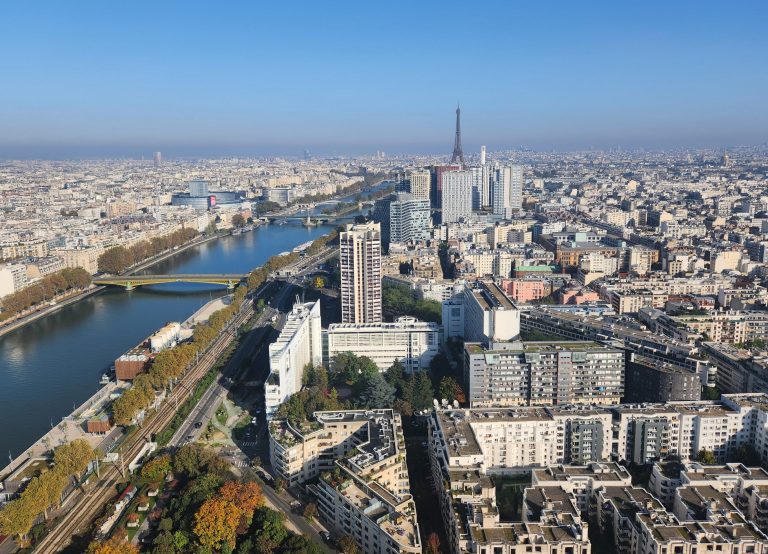
The answer, of course, is that it isn’t going anywhere except up and down, anchored as it is to a huge winch in the Andre Citroen Park.  However, it does almost match the height of the Eiffel Tower which is just a 30-minute stroll away along the banks of the Seine.  You might say the views from the balloon are even better than the views from the tower – because they have the tower in them.  And it’s a lot quicker and cheaper to get up and down.

Later we discovered that Stohrer the oldest patisserie in Paris was just five minutes away from our hotel, in the charming pedestrianised Rue Montorgueil.  Apparently, this is where Rum Babas were invented but more importantly it was the first shop where all the various confectionery skills were brought under one roof. Well worth a visit as there are a couple of nice cafes in the street too.

Night moves

Our last night in Paris, not being sure what to do or where to go, we decided to do it all, as in, sit on the open top deck of a bus as it trawled through the streets of Paris and the commentary regaled us with information and history and a fine collection of corny jokes that wouldn’t have made it into a self-respecting Christmas bon-bon.

But we saw all the fancy shops, many of the historic sights , including Napoleon’s tomb (another Wellington box ticked), and ended up at the Eiffel Tower for a 20 minute photo op.  It was actually a good way to get a sense of Paris at night – and certainly something you don’t get if you only travel on the Metro.

Speaking of which, earlier we had a trial run at finding the Chatelet Les Halles Metro station that would take us to the Airport in the morning.  It turned out to be part of a huge underground Westfield shopping mall, with cinemas, fashion shops and fast food outlets.  As for the station, directions to the many platforms would have been confusing in English, let alone our fractured French.

Unfortunately, we end up travelling in the morning rush-hour and our reconnaissance mission turned out to be a waste of time when we discovered that the escalators we had identified to take us and our luggage to the platforms were out of action.

And so after a jostling, shoulder-bumping, standing ride to Charles De Gaulle Airport we said goodbye to Paris and the rest of Europe, checking in painlessly for our Vietnam Airlines flight to Saigon where we had converted a 16-hour stop-over into a two-day layover. More on that next time.