Home Blog Page 19

Save on multi-stop spring Outback travels

0


Not too hot and not to cold – spring is a perfect time to explore the far horizons, rugged, open spaces, fresh air and big skies of the uncrowded NSW Outback. And to make the easy trip to the NSW Far West even easier, Out of the Ordinary Outback is offering discounted stays at its seven properties this spring.

Multi-property stays

Out of the Ordinary Outback is offering roadtrip lovers a 10 per cent discount on stays at two or more of its seven properties on the one trip through the region.

The open-ended offer (no booking or stay deadlines) is valid at the dune-cradled Broken Hill Outback Resort, 14 km outside the historic city, as well as The Argent Motel and The Tourist Lodge – both in Broken Hill, the Copper City Motel/Hotel in Cobar, the billabong-side cabins at Warrawong on the Darling at Wilcannia, the remote Ivanhoe Hotel Motel and the famous White Cliffs Underground Motel – Australia’s largest underground accommodation.

Spring wild flowers in the Outback

Including the 10 per cent discount, nightly rates (all per room for up to two people) start from just $110 at Copper City Motel/Hotel,  $190 for a subterranean room in the iconic White Cliffs Underground Motel and $195 in a deluxe king spa apartment overlooking the desert at the Broken Hill Outback Resort.

Less touristed and free of crowds, the easily accessible and close-to-home NSW Outback boasts majestic, ochre-red sand dunes, endless plains, Aboriginal rock art, star-filled skies and rugged ranges as well as character-filled outback pubs brimming with stories.

Road journeys from capitals like Sydney, Adelaide, Canberra and Melbourne can take highway wanderers to frontier towns like the mining centres of Cobar and Broken Hill, the remote and quirky opal hamlet of White Cliffs, the historic ghost towns of Wilcannia and Silverton and the home of the famous ‘Big Bogan’ statue, Nyngan.

Book direct through Out of the Ordinary Outback on 1300 679 688 or visit www.outoftheordinaryoutback.com.au

Here be dragons: 10 classic castles you can visit

0

There’s something about ancient forts and castles that stirs our imagination, transporting us back to more heroic times.

The launch of House of the Dragons, the prequel to streaming mega-hit Game of Thrones has renewed interest in historic fortresses including some that that have provided backdrops to the televisual feasts.

With that in mind, Sue Williams lays siege to ten of the world’s most compelling castles.

Medieval city wall built in the Romanesque style, Avila in Spain
  1. ÁVILA, CASTILE AND LEÓN, SPAIN

One of the most stunning is at Ávila, which has the most complete fortified complex in Spain standing high on a hillside. Towering walls built between the 11th and 14th Centuries stretch for 2,500 metres around the town, studded by 90 fortified towers. Inside, there are churches, Gothic palaces and the 12th Century cathedral. If the townsfolk decided to slam shut the gates, even Daenerys Targaryen’s dragons might have trouble getting inside.

avila.com

  1. ÓBIDOS, ESTREMADURA, PORTUGAL

On a lofty hilltop, and encircled by 12th Century fortress walls, Óbidos is one of the most lovingly preserved Medieval towns in Portugal. The best vantage point to explore its many charms are on those walls, walking across the tops for splendid views of the cobbled streets, painted houses, churches and tiny shops. The town is traditionally known as the Town of the Queens, since many queens of Portugal used to regularly visit. None, happily, was as vicious as Cersei Lannister.

portugal.com/portugal/cities/obidos

  1. FORT LOVRIJENAC, DUBROVNIK, CROATIA

The fortress outside the western walls of the city, it will be immediately recognisable as a stand-in for GoT’s King’s Landing. It’s a stunning feat of engineering as it took just three months to build. It was important for rejecting advances from Venice which wanted to take it – but those 12-metre thick walls were simply impenetrable. Its beauty lies mostly in its location, right on the coast, and these days it provides the stunning backdrop for the cliff-diving world series. 

dubrovnikcity.com/dubrovnik/attractions/fortress_lovrijenac.htm

  1. AIT-BEN-HADDOU, MOROCCO

The city of Ait-Ben-Haddou in Morocco is an ancient, mostly abandoned fortification noted for its clay architecture. In addition to being used by Game of Thrones as a stand-in for Yunkai and Pentos, the town has seen the filming of Prince of Persia (2010), Babel (2006), Kingdom of Heaven (2005), Gladiator (2000), The Mummy (1999), Jesus of Nazareth (1977), The Last Temptation of Christ (1988), and many notable titles.

Diwan-i-Am (Hall of Audience) at the Red Fort in New Delhi, India.
  1. THE RED FORT, DELHI, INDIA

Built of burnished red sandstone in 1639 right in the centre of the city, the red fort was the home of the Mughal dynasty emperors until 1857 and later used as a garrison. These days a UNESCO World Heritage Site, it houses a number of museums and is one of Delhi’s most popular sights. Even today, it serves as a bastion of peace. Outside, you make your way through crowds of beggars, often tiny children holding even tinier children asking for food. Inside, it’s blessedly peaceful, with gardens, a teahouse and the mosque.   

Wikipedia – Red Fort Delhi


Windsor Castle
  1. WINDSOR CASTLE, BERKSHIRE, ENGLAND

The oldest and largest occupied castle in the world, visitors are these days allowed to climb the 200 steps to the top of its round tower. From the summit, there are great views over the castle, the River Thames and the London skyline. When the Queen is in residence of her favourite weekender, the castle’s 15-metre flagpole flies the Royal Standard, and the Union Flag when she’s away.  Built in the 11th Century after the Norman invasion by William the Conqueror, inside is the 15th Century Gothic chapel, and it’s had various functions throughout its lifetime. Henry VIII and Elizabeth I used it frequently as a royal court and later it became, markedly less pleasantly, Charles I’s prison.  

royalcollection.org.uk/visit/windsorcastle

  1. THE ALEPPO CITADEL, ALEPPO, SYRIA

This was once one of the most stunning sites in the Middle East, right in the middle of Syria’s second city with locals – and tourists – strolling arm-in-arm around its 13th Century ramparts as it glowed softly gold in the morning and evening light. Today, after the five-year-long war, reports say parts of the citadel have collapsed and rubble clogs its formerly magnificent moat. Before the war, it was an amazing place, with tiny shops and stalls surrounding it, selling jewellery and religious artefacts. “We don’t know what’s going to happen in the future,” one of the shopkeepers told me when I was there just before the outbreak of war. “But the citadel has withstood many things, and we are confident it will still always be here.” But, of course, no one back then could ever have imagined the ferocity of the fighting that’s gone on since.

whc.unesco.org/en/list/21

8. MALBORK CASTLE, MALBORK, POLAND

When it was built in 1406 on the banks of the River Nogat by a Catholic religious group that became a military order, this was the world’s largest brick castle. Today, it’s still the biggest castle on earth by surface area. Staring up at its massive Gothic-style brick walls, you can just imagine boiling oil poured down to keep the enemy at bay, or showers of rocks thrown from the ramparts.

zamek.malbork.pl/historia

  1. GIBRALTAR

The Rock of Gibraltar, technically British but which should really be given back to the Spanish, is a stunning place in a magical location between Europe and Africa, with its sheer cliff face, its 16th Century Medieval structures and the tunnels carved into the rock to allow it to withstand sieges. I first visited as a small child and, while I was overwhelmed by its beauty, I hated the monkeys after one of the Barbary Macaques jumped over and pulled my hair. Hard.

visitgibraltar.gi

  1. Doune Castle, Scotland

Getting back to Game of Thrones, Winterfell scenes were filmed at Doune Castle in Stirling, Scotland, largely in the show’s first season. The real castle is quite a bit smaller than Winterfell is imagined on-screen, but the magic of cinematography gives it greater expanse. Doune Castle was also recently used as Leoch Castle in the Outlander (2014) series, as well as many iconic scenes from Monty Python and the Holy Grail (1975), including those involving the Trojan Rabbit.

https://www.historicenvironment.scot/visit-a-place/places/doune-castle/history/

  • Sue Williams visited Spain and Portugal as a guest of Bunnik Tourscom.au

ends

Scotland’s eBike safaris, wellness and wolves

0

With Scotland having dropped all Covid restrictions, its tourist industry is breathing fresh air into the bagpipes and giving the porridge a good stir as it sets out to make up for lost time before the winter chill sets in.

And, playing to their strengths, they’ve distilled some nature-based options, from an electric bicycle “safari” to a “wild wellness” retreat, into their offerings.

Scotland is beautiful at both the best and worst of times.  But these stay and play opportunities go beyond what Billy Connolly described as “windswept and interesting” (although he was talking about himself).

E-bike Safari

If you’re interested in adding some small-dose adrenaline to the wildlife watching experience? Wildlife Discovery offer the UK’s first wildlife safari on mountain e-bikes with guests being guided through the impressive Cairngorms National Park in search of the best of Scottish wildlife while limiting their carbon footprint. E-Bike Safari in the Cairngorms National Park

Britain’s biggest forest park

The Galloway Forest Park is Britain’s largest forest park, often referred to as the Highlands of the Lowlands’. The park is home to dramatic ancient woodland, magnificent scenery, and a huge range of local wildlife.  Whether walking, cycling, or fishing, the Galloway Forest Park has something for everyone. Galloway Forest Park

Turning Japanese

You may not know this but renowned Scottish architect and Art-Deco innovator Charles Rennie Mackintosh was hugely influenced by Japanese interiors. The Japanese Garden at Cowden provides another unique and utterly authentic bridge between Scottish and Japanese culture is the first and only garden of its size and scale to be designed by a woman.

The garden comprises several acres of Japanese influenced landscape with a perimeter path around a small loch and an additional twenty acres of woodland, ideal for peaceful Autumnal walks. It’s very reminiscent of the Japanese gardens at Cowra.  Cowra? Cowden? Both well worth a visit. Japanese Garden at Cowden

Born to be wild

Believe it or not, there is an active movement to bring wolves back to Scotland. Farmers who think lambs should only be eaten in kebabs and posh folk who think deer should only be prey to people in green wellies with shotguns both object loudly.

Be that as it may, Alladale Wilderness Reserve’s 100 square kilometres of rugged mountains, forests, rivers and lochs are located in the heart of the Scottish Highlands.  Alladale run regular rewilding retreats so it’s a fantastic place to learn about the benefits of rewilding, observe wildlife, and connect with nature. Alladale Wilderness Reserve

Wild Wellness

OLYMPUS DIGITAL CAMERA

Here at Mild Rover we do have the capacity to go wild on occasion.  So book us into Glen Dye, a private estate with holiday cabins and cottages surrounded by wild forestry on the banks of River Dye. 

Guests at the stunning accommodation – a brand new 12-person Coach House coming soon – can visit their School of Wild Wellness and Bushcraft which offers foraging, wild swimming, whittling, and adventure workshops in the great outdoors. Sounds more mild than wild, but that’s right in our wheelhouse.

One other thing – the reason we used the somewhat counter-intuitive but doubtless ironic picture above was because it was the only one on their website that was landscape (as in wide) rather than portrait. Just as well they aren’t offering a photography course. Glen Dye School of Wild Wellness and Bushcraft

Women take the wheel at all-girl African game lodge

0

Forget the elephant, buffalo, giraffe, lion and even leopard. There’s a stunning sighting of a much rarer African species awaiting travellers on safari in Botswana at one wildlife reserve: female guides.

In an industry traditionally dominated by men, women have broken through to take all 20 guiding positions at the Chobe Game Lodge in Chobe National Park in the north east of the country.

“I think a lot of visitors are very surprised to see that we’re all women,” says head guide Vivian Diphupu, 37, who’s been working at the lodge for seven years. “You can see them look at you and hesitate as they get into the car.

“But always by the time we’ve finished the game drive, they seem very happy. I think we show them how good we are at our jobs. It’s nice to demonstrate girlpower and we’re very proud of ourselves.”

The lodge, the oldest luxury lodge in Botswana and now celebrating its 50th year since construction, started taking on more female guides when new general manager Johan Bruwer (correct) took over in 2004. He’d noticed how popular the one woman on the staff, Millie, was among tourists who’d vie to have her as their guide, would applaud her on their return from a drive and gave great feedback afterwards.

“So I looked around and found there aren’t many female guides at all in the industry,” says Johan. “I contacted the Government’s Botswana Wildlife Training institute in Maun where young people go to train as guides and asked them if they had any females.

“They said they had some now and again, but they battled to place them in the industry as companies were often reluctant to employ them. I told them to send them all to us and we’d take them on.

Head Guide Vivian Diphupu

GM Johan Bruwer

Left to right Sue, Kedi, KG and Gracious

Kgomotso (KG) Motsumi

“I’ve found they make great guides as they tend to be better communicators than men, they’re faster learners as they’re so motivated and they’re gentler with the equipment.”

As a result, the number of female guides showing visitors around Chobe, Botswana’s first national park and its most biologically diverse, has now grown to 20 – the entire contingent of guides.

They drive all of the silent electric-powered safari vehicles and boats of the eco-friendly lodge, to show tourists the hippos, crocs and myriad birdlife of the Chobe River, as well as the land animals, including some of the resident 45,000 elephants, the highest density of the mammal in Africa.   

Kgomotso (KG) Motsumi, 35, has been a guide at Chobe for seven years. “I love it,” she says. “It’s always different every day, and I love showing visitors our wildlife and landscapes. It’s such a rewarding occupation.”

While Millie is no longer at the lodge – she’s now living in Scotland after marrying a guest – the barriers for female guides are now steadily being broken down all over Africa. Other tourism operators throughout the continent visit to see how well the all-woman team works, and strive to mentor other female guides. 

American tourist Lena Santos, 71, a retired teacher visiting Chobe as part of a pre-Azamara cruise land program, says she relished being taken out on safari by women. “It’s the most amazing thing,” she says. “I loved it. It was great too to see the men defer to their knowledge and treat them with such respect.

“And they are such great guides! You see them tracking the animals and be so patient about it and talk to us about what we’re seeing. Sometimes, you feel male guides find an animal to prove they can, but for the women it’s about showing us and sharing the enjoyment.”

As for Johan, pioneering the entry of so many women into the profession – as well as the environmental smarts – has proved exceptionally rewarding.

“We wanted to make our business sustainable and also give back to the local community when it comes to employment and employment equity,” he says. “Now women make up 57 per cent of our entire organisation.

“And we pay our female guides more because we want the best, and they’ve now become a real attraction of their own.”

  • Sue Williams stayed in Chobe as a guest of Azamara’s first pre-cruise African land program

TRIP NOTES

FLY

Qantas flies direct from Sydney to Johannesburg.

TRAVEL

Azamara cruises recently introduced its first pre- and post-cruise land program in Africa, visiting Chobe in Botswana, the Victoria Falls in Zimbabwe and South Africa’s Johannesburg for five days before its 10-night South Africa Intensive Voyage along its coast.

MORE INFORMATION

Azamara cruises and pre- and post-cruise land programs, Phone 1800 754 500; See azamara.com.

traveller.com.au/botswana

Hiking to Loch Ness – monster optional

Not a lot of people know this – and that includes many Scots themselves – but there is a canal that runs from the West Coast of Scotland, all the way up to the North-East, from the Atlantic to the North Sea.

Big enough for narrow-boat barges and cabin cruisers alike, it is a triumph of 19th engineering that will take you from the slopes of Ben Nevis – the highest mountain in Britain, to Loch Ness (monster optional) and beyond.

It was never the critical trading link across the Scottish Highlands that you might imagine. In fact it was more of an early 19th Century job creation scheme, and the brainchild of a couple of engineers who saw the straight line of a geological fault as an invitation to connect the lochs it had created.

However, it did allow troops and munitions to be transported across Scotland during World War I, avoiding the foes lurking around the northernmost extremeties.

The Caledonian Canal’s main function these days is to take tourists through the forested and heathered rolling hills and glens of this part of the UK. And if boats are not your thing, you can hike or cycle woodland and hilltop tracks in a challenging but eminently doable five or six-day adventure.

In fact, one company, Caledonian Discovery, allows you to do both; cycling, hiking or even canoeing during the day and catching up with your travelling B&B at night

But we are hikers, and my regular walking companion Kieran and I took advantage of the lifting of covid travel restrictions as well as some family matters I had to attend in Scotland, to book a one-week hike along the Great Glen as it’s known.

The idea is that you walk an average of just about 20km a day and stay in B&Bs (real ones, not the Air variety) and eat in local restaurants along the way, while most of your luggage is transported to be waiting your next billet.  A great way to see the countryside and meet the people, we thought.  And mostly we were right.

One spanner in our works was industrial action on Scotrail which meant that our train from Glasgow to Fort William was cancelled and replaced by a 13-hour “alternative” bus service. Our rescue by my niece and her husband is detailed here.

We correctly anticipated a similar problem on the way back and booked a couple of seats on a “MegaBus” from Inverness to Glasgow. So much for the problems – on with what turned out to be a terrific sojourn through some glorious countryside.

Beginnings

If you are heading from the South-West to the North-East, as we were, you start in Fort William which is basically a tourist town at the ends of both the Great Glen way and the West Highland Way. The latter is a much more challenging hike from Milngavie (pronounce Mull-guy) just north of Glasgow. It involves camping and carrying your own gear so that was never going to work for us.

We wanted to thank our personal Uber drivers by buying them lunch but, to be brutally honest, the food in the Ben Nevis Bar – half the eateries around here are named after the mountain – was a mountainous disappointment. 

K and I both like Cullen Skink – a very Scottish potato and smoked fish soup. What we were served was a watery, slightly fishy gruel thinned out with excessive cream. It’s a standard practice among many tourist-trap eateries … cater for the lowest common denominator and let the serious foodies find somewhere better, if they can. 

Just looking at Tripadvisor, you will see we “lucked” into one of the lower-rated restaurants in the town.  Should have checked BEFORE we wandered in.

It’s worth noting here that we were advised to book our evening meals in advance along the way.  It turned out to be a wise move. Tourism in Britain is just recovering from the various restraints of Covid-19.  Everywhere we went, there were “Hiring” signs on café and pub windows.  But the Tavern in the High Street squeezed us in and it was fine.

B&B: Craig Nevis Guest House, Belford Road, Fort William (4/5)
Meals: Ben Nevis Bar, High Street, Fort William (2.5/5)
             The Tavern, High Street (3.5/5)   

Fort William to Gairlochy

Fort William is a pleasant little place, if very touristy, and things only got better day by day as we headed North-East.  We were barely out of town when the “Harry Potter” steam train puffed its way past us at a level crossing.  Gogs, our host at the B&B the previous night, also runs the dining car on the train to Mallaig, officially named the Jacobite but now much better known as the Hogwarts Express.

Day one began in glorious sunshine with a very gentle (i.e. mostly level walk) along the canal towpath, having stopped for coffee and scones at a café at the top of the engineering marvel that is Neptune’s Staircase  – eight canal locks that raise or lower boats by 20 metres in a stretch only 450 long. 

Considering it’s exactly 200 years since the Caledonian Canal was opened, it shows what a combination of brain and brawn can achieve without the assistance of modern machinery.

Our first stop was Gairlochy or, more accurately, Spean Bridge, since there is nothing at the former except a phone box and a bridge.  Our genial hosts picked us up and drove up to our lodgings. The couple running the place had just spent tens of thousands of pounds doing the B&B up when covid hit, but finally it was starting to pay for itself.

My heart skipped a beat when Simon (the host) mention a spa in the town.  A massage for my weary legs, perhaps? Turns out he was talking about a Spar, which is a small supermarket chain.

Showered and shaved, we arrived for our evening meal at the Old Station Reastaurant half an hour early. It was just as well as our waitress began proceedings by telling us what was no longer available from the menu, due to a combination of staff shortages and an unexpected return of large numbers of tourists. The fish and chips were just fine and we had the pleasure of watching the overnight sleeper train to London from Fort William trundle through.  No cancellations on that, then.

B&B: Coire Glas Guest House, Roy Bridge Road, Spean Bridge (4/5)
Meals: Old Station Restaurant (3.5/5)

Gairlochy to Invergarry

Deposited back at the swing bridge across the canal, we had to scurry across as it was about to open. I do like a good bridge and swing bridges are a particular delight but you do want to be on the right side of them when they open. That’s when we made our first wrong turn of many along the way, but it was only a brief detour to a cul de sac before we found the right track and headed north again.

Now, it has to be said that K and I like to get from A to B as efficiently as possible; it’s as if there’s a niggling sub-conscious doubt about our ability to make the full distance. So we march on, ignoring ruined castles and fascinating museums along the way.  This is no leisurely stroll – and neither was it in our previous treks in Portugal and Japan. Getting there takes priority over being there, so we tend to ignore time-consuming and leg-wearying detours.

The hike to Laggan Locks was undemanding and the late Spring weather was fine.  But then there was nothing.  No café or pub awaited us, to rest our aching joints and re-caffeinate our depleted systems, before the last stretch to Invergarry. A pub on a permanently moored barge only opened at weekends. And there was worse to come.

Our accommodation for the night was the Invergarry Hotel, another 3km away and the guidebook strongly advised taking the track over the hill rather than round by the road.  There is a very good reason for this. The speed limit on normal, winding country roads in the UK is 60mph or nearly 100kph in new money, the speed limit on our urban motorways. 

Scottish drivers seem to take the 60 limit as a minimum, rather than a maximum speed, and snake along the twisting roads, like high-speed trains but with the carriages jostling to get to the front.  Without a path alongside the road, you’d be taking your life in your hands.

So it was over the hill, which would have been fine if Forestry Scotland hadn’t decided to cover two-thirds of the route with loose shale – sharp-edged random rocks that threatened to twist your ankles then shred them with every step.  This is not what you need at the end of a long day’s hiking.

However, when we mentioned to the barman at the lovely old Invergarry Hotel that we wished we’d take the road, he shook his head, “Ye’d never have made it, sir.” Which made us feel slightly better. A group of three young American women we had met briefly in Span Bridge admitted they had hitched a ride on a Forestry truck as soon as they encountered the crippling shale. This was not something we needed to hear.

Dinner in the hotel was great but breakfast was spectacular.  I’d decided to sample as much local produce as I could (with reservations, being pescatarian) so the smoked haddock with poached egg was a must for me, and what a splendid choice it turned out to be.  I did not miss the bacon, sausages and various other meaty delights for an instant.

B&B: Invergarry Hotel (4.5/5)
Meals: Dinner (4.5/5)
             Breakfast (5/5)

Invergarry to Fort Augustus

After another missed turn and backtrack, we headed north again, this time into the first serious climbs of the hike.  At this point I should note that there were some spectacular views along the way and you can see some of our pictures in the attached slideshow.  From Ben Nevis at the beginning to Loch Ness at the end, there was no shortage of calendar-worthy views.

The weather had taken a turn for the worse, with horizontal rain on the hilltops and even the final few clicks along the canal proving to be more of a wearying trudge than a blessed relief.   

Fort Augustus is even more of a tourist town than Fort William, if only because there’s not much else going on here. Perched at the southern end of Loch Ness, it’s an obvious stopping point for bus tours, which explains the ginormous bus parking area just outside the town centre.

The other sure sign is the abundance of bars, cafes and restaurants, all of which seemed to be over-booked and understaffed.  There was, however, one exception – the Station Road restaurant at the Lovat Hotel.

This was one of the finest meals I have had anywhere and quite unexpected in the middle of a Highland trek.  At 70 UK pounds for a three-course tasting menu, it might be a bit exxy for a budget traveller, but if you were to push the boat out at only one point on this journey, this would be the place to do it.

The groan-inspiring pun on the B&B’s name would have been more easily forgiven had it not been an extra kilometre up a hill out of town.  But it was a pleasant enough place, clean, comfortable and welcoming.

B&B: Thistle Dubh, Fort Augustus. (3.5/5)
Meal: The Station Rd at the Lovat Hotel (5/5)

Fort Augustus to Invermoriston

The next stage was the 13km hike to Invermoriston including a couple of challenging climbs. There was an option to take a lower road closer to the loch and save about 1.5 km but that seemed to be missing the point.  However, it was worth every muscle twinge and aching bone.  The views over Loch Ness were spectacular and apparently much less so from the lower road.  

As luck would have it, our B&B there pulled the booking at the last minute, so it was soup and coffee at the Invermoriston Hotel, then a short bus ride back down the road, then back again the next morning, after a second night in the mini-metropolis that is Fort Augustus.

That night, we ate Chinese food and drank draught beer at the Richmond House Hotel and it was just fine.

B&B: Thistle Dubh, Fort Augustus. (3.5/5)
Meal: Richmond House Hotel (3.5/5)

Invermoriston to Drumnadrochit

Having taken the bus back to Invermoriston, en route to Drumnadrochit, we were confronted by a much stiffer climb and, at 26km, a longer walk than before. Needless to say, we chose the low road this time; equally needless to say, we missed the turning and took the high road anyway.  However, once again we were rewarded with great views not to mention a well-earned sense of satisfaction.

We stopped for coffee and a slice of home-made gingerbread at the Grotaig Pottery, where they let us eat the packed lunch we’d bought at a supermarket in Fort Augustus.  And that’s where things started to go spectacularly wrong.

There was a gated track as we came out of the pottery marked “Hill Path”, which turned out to be a challenging scramble up a steep hill.  Halfway up, when we got a signal on our phones, we realised we were headed in entirely the wrong direction. By the time we’d scrambled back down – no fun for ageing knees – we’d added an hour to the trek and a very strenuous one, at that.  And we still had 10 km to go.

Exhausted and disheartened, I stuck my thumb out at a passing car. It stopped.  The driver was another hill walker who’d got lost on his own mini-trek and he knew exactly what we were going through. And so we got to Drumnadrochit in time to enjoy the best fish and chips ever from a stall outside the Fiddlers Restaurant and check into the finest B&B in Scotland, possibly the universe.

How good was the Morlea?  Electric boot drier/warmer inside the front door. Nespresso coffee machines in the rooms.  Two slices of home-made lemon drizzle cake in a tin on the bed – plus a recipe so you could make it yourself when you got home – and a hot water bottle in case it got chilly. The only problem was that I really didn’t want to leave.

B&B: Morlea, The Village Green, Drumnadrochit (5/5)
MEAL: Fiddlers Restaurant, The Village Green, Drumnadrochit. (4.5/5)

Drumnadrochit to Inverness

The last leg was by far the longest and, it turned out, the hardest.  The 32 km starts with a couple of steep climbs then makes a series of undulating descents  towards sea and loch level at Inverness.

Many hikers split the route, being picked up halfway along, dropped back at their lodgings in Drumnadrochit, or ahead at their billet in Inverness, then deposited where they left off to complete the hike the next day.  We did not do this.  It was at about the highest point, 383 m and 10km in, that we decided it might have been a good option. Still we soldiered on and stopped at the Abriachan Forest Trust picnic site, where the Great Glen Way crosses a paved road from somewhere to somewhere else, and ate the giant sandwiches we’d bought from the Post Office Café in Drum before we left.

A little further on we stopped in at the Abriachan Eco Café for coffee – orange cake compulsory – which was a bit like wandering into an episode of Ozark or Justified. Least said about the ruggedly rural couple running it, probably best.  We were joined unexpectedly by the American girls who had decided to split the hike, giving themselves two nights in Inverness.  It was a welcome distraction. The coffee and cake were nice but were they worth 90 bucks for the five of us?

I can’t recall exactly how far from the end of the trek we were when we went wrong on the final section, but we reached a gated and fenced path running alongside a small stand of pine trees. There were no signs – a dark blue thistle in chevrons – to be seen and the last time we’d taken a detour like this, we had spent an hour scrambling up a serious hill in the wrong direction.

We followed the forestry road round through a car park when we should have walked through the gated and fenced (but unmarked) section.  As a result, the last 10 km or so was all on unforgiving bitumen, either on steep descents or alongside traffic hurtling along at death-defying speeds. Had we taken the other route, we’d have been walking through woodlands and alongside a golf course for most of the last leg.

I can’t say too much about the B&B in Inverness because there was something we said or did that clearly annoyed the host, although I have no idea what it was. Maybe he thought that I was trying to sound Scottish (my accent had been thickening day by day) or the fact that Kieran got his name wrong (Danny instead of Gary) or that we insisted on taking a cab rather than walking the short distance to the city centre (because by this stage I could barely walk). Whatever it was, we seemed to have rubbed him up the wrong way.

To his credit though, he allowed us a late check-out so we didn’t have to wait too long for the bus to Glasgow.  And he has nothing but four and five-star glowing reviews in Tripadvisor so I wouldn’t tell anyone to avoid it.  I just wouldn’t be in a rush to return myself. Or with Kieran.

But I would have liked a second night in Inverness.  It seemed like a jumping little town when we were waddling back to the B&B from dinner, with live bands cranking up in every other pub and restaurant.

B&B: Fairfield Lodge
Meal: Fig and Thistle, Inverness (4/5)

End of the road

So was it worth it?  That would be a definite yes.  I wouldn’t do it again, necessarily, as there are other treks in other parts of the world to master before I hand in my walking poles.  But I do fancy the cycle and barge option, if I ever have a spare week in Scotland.

We saw a lot of couples along the way, she cruising sedately on an ebike, he sweating profusely a couple of minutes later on a regular mountain bike – and I would certainly recommend it to anyone who wants to see Scotland and appreciates some historic civil engineering.

Actually, I’d go back for the breakfast at the Invergarry Hotel, the dinner at the Lovat in Fort Augustus and the lemon drizzle cake at the Morlea in Drumnadrochit. Sign me up for them right now.

Luxury Qantas charter drops in on near neighbours

0

Spread your wings and satisfy your taste for adventure on an unforgettable nine-day luxury tour of Queenstown, Norfolk Island and Hayman Island, travelling by privately chartered Qantas 737 all-the-way.

This once-in-a-lifetime experience will take you from Sydney to the snow-capped mountains and pristine lakes of Queenstown, the stunning South Pacific haven of Norfolk Island and the azure waters of Hayman Island in the Whitsundays, before returning to Sydney.

Travel between destinations on a plane chartered just for your tour group – making yourself comfortable with at least one seat between every passenger – with gourmet meals and local wine served onboard. 

Marvel at Milford Sound on a nature cruise before enjoying a scenic flight back to Queenstown aboard a fixed-wing aircraft. Discover the quirky goldrush hamlet of Arrowtown, before taking your pick from a host of Queenstown experiences, including a jetboat ride, 4WD adventure or helicopter flight.

In Norfolk Island, delve into the island’s fascinating history and choose to learn the untold story of the Pitcairn Island Settlers, take an adventurous 4WD island tour or enjoy a local tasting tour. Step from private plane onto private yacht to travel to Hayman Island in the Whitsundays, where you can enjoy your choice of a hike to Blue Pearl Bay, a speedboat ride, an exclusive fishing experience and more.

Relax with stays in standout accommodation, including at Hotel St Moritz Queenstown – MGallery in Queenstown and InterContinental Hayman Island Resort. Enjoy unforgettable experiences and the services of expert guides, along with all meals, beer, wine and soft drinks with dinners and meals aboard the plane. 

Your tour includes: 

·         Eight nights of luxury accommodation 

·         Private chartered flights from Sydney with all meals and drinks included 

·         Roundtrip Hayman Island transfers by private yacht 

·         Scenic flight from Milford Sound to Queenstown 

·         Daily breakfast, lunch and dinner 

·         Your choice of Queenstown excursions 

·         Your choice of Norfolk Island excursions 

·         Your choice of Hayman Island excursions 

·         Concierge service for luggage 

·         Expert guides accompanying you throughout the experience 

·         All sightseeing, gratuities and entrance fees per itinerary 

·         Luxury air-conditioned transportation throughout 

  • 9-day tour from only $11,990 per person (twin room). For more information phone Luxury Escapes on 1300 88 99 00 or visit luxuryescapes.com. Sale ends 15 August 2022. Valid for travel until 10 May 2023. 

Bali food: Sublime to ridiculous

0

Last week Sue and I headed off to Bali, escaping post-covid blues and, we hoped, staying one step ahead of Foot and Mouth Disease.

We were there to sample the many delights of various Como resorts – from the health and wellness focus of Como Shambhala – half an hour from Ubud – to Como Canguu, right in the hear of a surfing Mecca.

In between, we stopped off at Como Uma, just outside Ubud.  We’ll go into the resorts in more detail in a later edition of Mildrover but along the way we tried and tasted some of the best and healthiest food a couple of mildly roving pescatarians could wish for.

And, just in case we got ahead of ourselves, we were brought crashing back to earth at Denpasar Airport where the choice of food was overpriced and uninspiring, to say the least.

Click on this gallery for an introduction to the best and, in one case, worst of Balinese cuisine.

Healthiest breakfast I’ve ever eaten, Como Shambhala

Room service lunch on the balcony, Como Shambhala

Fruit plate, Como, including dragon fruit and jackfruit

Fries like you never saw before.

Steamed Greens, Green Goddess Sauce and poached egg, Como Shambhala, Ubud

Berbagi Rasa (a sharing starter) in Nusantara by Locavore, Ubud, See below for details

Picnic lunch by the river, Como Shambhala

Fish Tacos … yumola!

“Real Toast” – Como Canguu

French Toast, Como Canguu

A healthy green drink, slightly less so banana smoothie and iced coffee (with stevia sweetener) in the Cheatery Canguu

Something spicy steamed in a banana leaf in the Casa Tua, Canguu

… and there it is, delicious

Burrata in Como Canguu

Vegan Caesar Salad with snapperIn Como Canguu

Macaroni cheese (bacon not optional) and fries in Denpasar Airport

Berbagi Rasa

Main picture, clockwise from front centre

  • Sambal Teri Kacang: salted fish, peanuts, shallot, garlic, chillies, kaffir lime leaves and palm sugar.
  • Keripik Sanjai: Cassava crackers seasoned with chillies, lemongrass and kaffir lime leaves
  • Keong Sawah Pedas: Rice field snails braised with chillies, salam leaves, lemongrass and sweet soy sauce)
  • Martabak Tahu: Tofu, shallots, garlic and leek wrapped and cooked in spring roll skin.
  • Sempol: Tapioca fritter seasoned with celery leaves, served with a mild peanut sauce.
  • Asinan Bogor: Tropical fruit marinated in rice vinegar, chillies and shrimp paste.
  • Tempe Mendol: Fritter made with tempe, aromatic ginger, coriander seeds and kaffir lime leaves.
  • Rujak Cemcem: Cemcem leaves marinated with chillies, sea salt and shrimp paste.
  • Keripik Bayam (centre): Amaranth leaf deep fried with rice flour. turmeric, chillies and coriander seeds.

Bag with everything is a bit too much

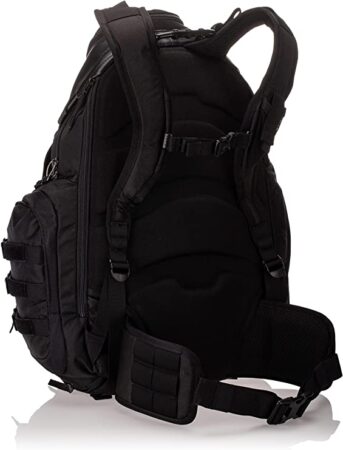
I like good design and a love a bag – whether it’s a duffle bag, shoulder bag, day pack or wheelie carry-on … I’m there.

So I never thought I would ever write these words – you can over-design a backpack.

I’m feeling very ungrateful as the backpack in question was a gift from my fellow writer and hiker Kieran.  He knows all about my passion for design and luggage so he bought me a bag called the Oakley Kitchen Sink.

That’s Oakley (as in the sunglasses) and Kitchen Sink as in, it’s got everything.  And it has. Laptop compartment, soft padded easy-to-access section for sunglasses (of course) and phones, hard case sections for … well, what are they for? Pens? GPS trackers?

My reaction on receiving it was an ungracious “which small country do you wish me to invade?”

To be fair, there are things about this bag that I like a lot.  The zipped side access for your laptop – every backpack should have that. The hard shell compartment for sunnies and phones, ditto. The twin quick-release hooks that hold the top flap in place are very cool. The exposed steel cable structures look like they mean business.

Had I broader shoulders the padded straps would have been very comfortable and the removable waist strap was a boon for long hikes.

But do I really need three shiny black loops to attach carabiners for … well … what?

The commodious side pockets are great but you have to open them more than half way from the bottom to put anything in or take anything out. Spillage is inevitable.

The huge internal section is only one giant pocket, apart from the laptop sleeve and the obligatory shoe bag. And there is no waterproof hood to pull over it to ward off heavy rain.

To get to the insides, you have to lift the top flap then unzip.  The front section with it’s hard-shell pockets is small and impractical.  It speaks volumes that the official Oakley pictures show the biggest utilities section loaded with nut bars.

And as for the triple Velcro straps on both side pockets?  What are they for? How many rain jackets do you need.  Trust me, they are next to useless for walking poles.

Confession time – having used the bag on a six-day hike in the Highlands of Scotland, I have regifted it and the recipient absolutely loves it. He’s a carabiner and Velcro strap kind of guy. My excuse was that it was just too big for me – which is true.

Maybe it’s just me but this very sexy looking bag, when put to the test, felt like a sunglasses case around which they had built a backpack.

If I haven’t put you off, the Oakley Kitchen Sink can be found for $249 on Oakley’s own website and just under $300 on Amazon.

Interestingly, the reviews on Amazon (4.5 stars) are almost evenly split – some think it’s the bees knees, but others, while admiring the look, say it’s just to big, heavy and fussy.

CitizenM: Quirky, funky, fun and comfy

0

To say CitizenM hotels are quirky could be the understatement of any travel article.

Huge beds that take up half the room, shower and bathroom modules that change colour according to the settings you put in on your phone, bottomless breakfasts, comfy lounges, full bar, friendly staff and self check-in and check-out are just a few of the features that distinguish this very European chain from its competitors.

Priced above the cheap-sleep hotels but below the traditional holiday or full-service commercial properties, CitizenM has a youthful, arty vibe. 

For instance, the “do not disturb” signs say “Shh, I’m writing” (or they did the last time I was there) and a notebook is provided for your next brilliant idea.

If there is no one with you to share your giant bed, there’s a weird cushion doll to snuggle up to.

I stayed in the CitizenM Glasgow three separate times on my recent trip to Scotland and, simply put, staying there helps make travel more of a pleasurable event than a chore.

There are 21 CitizenMs in operation, mostly in Europe, with a few in North America and a couple in Asia.  There are currently 10 more in the pipeline – you can find a complete list here.

They are fun, funky, immensely practical and hugely welcoming.  One flaw – they don’t have a kettle in the room. 

But hey, if they don’t want me visiting the bar in my pyjamas to grab a coffee in the middle of the night when the jet lag sets in, then they need to feed my caffeine habit in the room, where I’m working.

One travel upgrade that you really don’t want

0

There is something about car rental operators overseas: they seem determined to  confound and confuse weary travellers.

You would think that an agency at an airport would consider that some of the passengers who’ve just decanted from aeroplanes would have come from foreign countries.

Specifically, in their line of business, lands where they drive on the other side of the road, often in vehicles smaller than an Australian military Bushmaster.

I’m thinking the UK, Ireland, India and Japan as well as Australia and New Zealand.  So, when the size of vehicle you have booked isn’t available – and it never is – you’d think they might offer you a choice something more modest, rather than gleefully loading you into a gas-guzzling monster truck, as if they’re doing you a favour.

And how about taking into consideration that you might never have driven a vehicle that’s push-button only?

I spent a bewildering half hour in the Alamo car park at the airport in Richmond, Virginia, first of all trying to work out how to program the sat-nav, or even just switch it on.

I thought I had paid the astonishingly reasonable $17 for three days of sat-nav hire only to discover I had paid for satellite radio.  That explains the ridiculously low cost.

I cancelled that when I realised that what I called sat-nav, they called GPS and I didn’t need to pay anything.  Just plug my phone into a USB socket in the dashboard and I could get turn by turn instructions via Google, and in an Australian accent too.

Sadly, I hadn’t yet taken out the Optus $10 daily global roaming data option for my phone, so my GPS service would turn out to cost $150 in data over-charges. Aaaargh.  

The GPS activated, the address typed in and the engine started I then looked for the gearstick and handbrake.  This car had neither and nothing I did would make it move.  I might as well have sat there going vroom-vroom.

OK, I guessed it was automatic – I’m not that dim – but that still required some sort of input from me.  I call a passing attendant and, trying not to sound like a five-year-old, asked him the humiliating question: “How do I make this thing move,”.

He pointed to a series of buttons in the console that I had assumed was a cassette player P for play, R for rewind.  A nice retro touch, I thought.

It turned our P was for park, R was for reverse and D – which I hadn’t managed to translate into Walkmanspeak – was for drive.

“Oh, I thought that was the cassette player,” I said, grinning apologetically.

‘What’s a cassette player?” the millennial asked. I could have slapped him … if I’d known how to lower the window all the way.

The next few days passed without much in the way of motoring incidents.  I managed to mostly stay on the right side of the road, I didn’t grind the hubcaps or mount the kerb (sorry, curb) more than a couple of times, due to not being able to judge the width of the vehicle from the wrong side.

And I resisted the temptation to get to wherever I was going using a series of only right-hand turns.

But the next time I have to hire a car in the states, when they offer me a free upgrade, I’m going to demand a down-size … preferably into one with some kind of stick.